Washington College Access Network: Supporting Students to Own Their Future
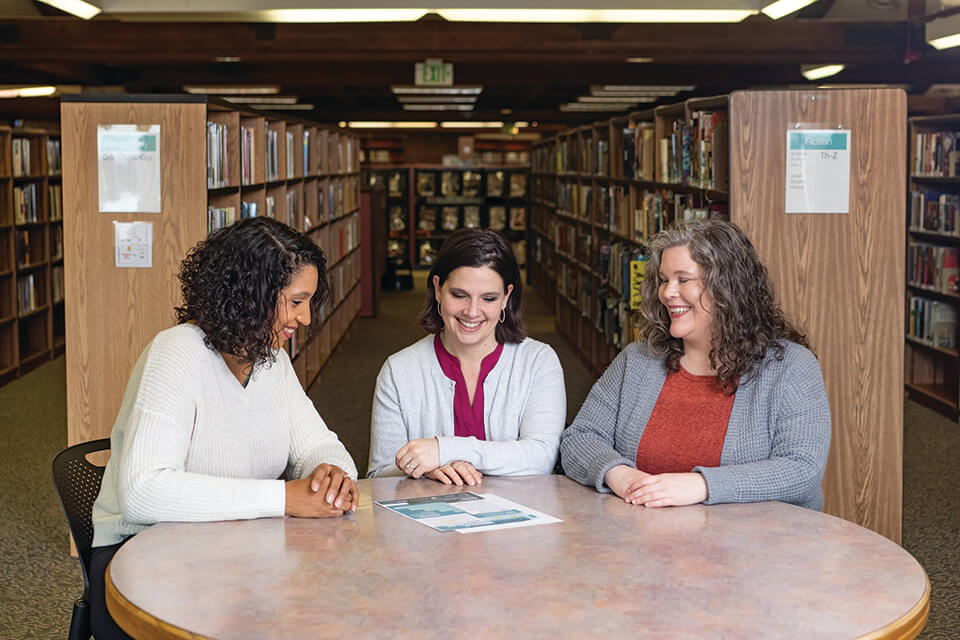 Anna Fulford, far right, is WCAN’s College Bound Regional Officer serving the Olympic Peninsula including Mason and Grays Harbor Counties.
Students from wealthy families are five times more likely to graduate from college than students from low-income families. College Success Foundation powers the Washington College Access Network (WCAN) to support all Washington state students in pursuing a postsecondary education. As the COVID-19 pandemic has highlighted educational inequities in the U.S., the WCAN team at CSF has buckled down and continued providing resources and recommendations remotely.
WCAN professionals collaborate with state agencies, schools and districts and community organizations with a focus on creating a support network for low-income students who enroll in Washington state’s College Bound Scholarship. CSF’s Anna Fulford—serving the Olympic Peninsula, including Mason and Grays Harbor Counties—is one such professional.
“We create partnerships with school staff to foster college-going culture for 7th to 12th grade students,” Anna says. “We also wear a ‘community hat’ and work with organizations that are involved with college access. Our work helps ensure students continue from middle school through college successfully.”
There has been an overwhelming need for hope and reminders of resilience. By providing resources and recommended practices, the WCAN team has supported community members and educators as they navigate the anxieties students are facing. WCAN continues to collaborate with community partners to ensure every student has assistance from a trusted adult, the information they need to be successful, and access to all financial aid opportunities available to them. Students in Washington state have a lot of information to navigate, and WCAN works to ensure adults know what recommendations to make.
This spring, before the pandemic hit, Anna connected with Graduate Strong, a collective impact network of 65 community organizations, businesses, local school districts and tribes in Kitsap County. She leveraged her expertise in college access to help build a series of Financial Aid Navigator workshops.
These three-hour workshops taught community members how to help students navigate the financial aid application process. Now, as the financial aid application season begins with increased complications due to COVID-19, these community members are better equipped to support students through these challenges.
“Applying for financial aid can seem pretty complicated,” Anna says. “Every student’s situation is a little bit different, and the Navigator training includes information about the most common obstacles students encounter when filing their application for financial aid, the FAFSA or WASFA.”
Complex living situations, separated parents, foster care and homelessness are all issues students can face even in pre-COVID times. The main message of these training sessions: You don’t have to be an expert or tax professional to help students make sense of the language and understand the questions on their financial aid applications. Training adults in our communities helps ensure every student can find a trusted mentor to provide guidance and answer questions as they navigate the financial aid process.
“We support those who support students,” Anna says. “Our goal is to empower more adults in the community so more students have access to a trusted advisor to help them get to their desired career after high school.”