Practitioner Support: Empowering the Guides Who Change Students’ Lives
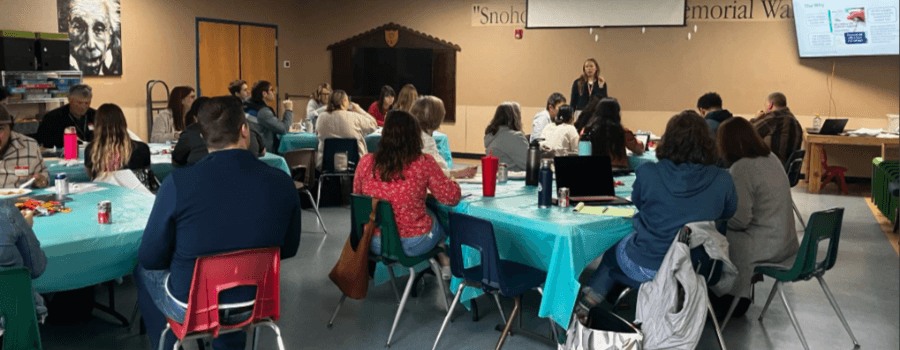
In addition to providing direct support to students in high schools and colleges, College Success Foundation partners with schools, districts and community-based organizations across the state to arm practitioners with the tools and confidence to guide students and families through financial aid, career exploration, college enrollment and completion.
“By building the capacity of those who work directly with students, we are strengthening the systems that support students’ college and career readiness across the state. Our goal is to create lasting change and have a scalable impact across Washington’s schools and communities,” says Director of Statewide Initiatives Adrienne Beebe.
College Success Foundation also works closely with the Washington Student Achievement Council (WSAC) to support capacity building for the College Bound program and other college access areas.
Regional College Access Managers
Our Regional College Access Managers (RCAMs), formerly known as WCAN or College Bound Regional Officers (CBROs), will support approximately 5,000 education practitioners and more than 300 partner organizations (e.g., schools, districts, colleges and community-based organizations) statewide this year by providing: hands-on, tailored training; responsive technical assistance; and relevant, curated tools and resources. These capacity-building supports equip educators and community partners with the knowledge to guide students and families through every step of the college journey.
“As the school year starts up again, and as RCAMs are reaching out to practitioners, we invite those who are in the college access space to connect with us,” encourages Adrienne. “As the FAFSA and WASFA forms open up in October, our team will be out in the community sharing financial aid knowledge and more with our partners.”
Connect with a Regional College Access Manager in your area.
What Can Support Look Like?
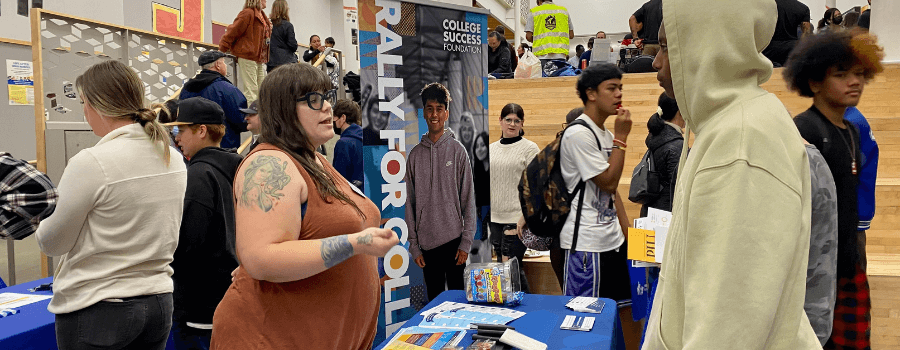
Support from an RCAM can take many forms, including hands-on, tailored training; responsive technical assistance; and access to curated tools and resources.
“I recently spent time with the UW GEAR UP South King County team exploring the ins and outs of the WSAC’s College Bound program,” notes Regional College Access Manager Melissa Ka’iulani Pico. “Through case scenarios and real-world examples, we were able to dive into questions and have meaningful discussions about enrollment, student eligibility, how to access the program and ways to effectively introduce College Bound to families.”
One of our most significant areas of practitioner support surrounds the FAFSA and WASFA financial aid forms.
“Our upcoming virtual FAFSA Train-the-Trainer sessions will walk school staff and community partners through every part of the 2026-27 FAFSA form and other financial aid options,” shares Regional College Access Manager Raúl Sánchez. “We will cover common mistakes, financial aid appeals and how to support students in unique situations such as foster care, McKinney-Vento, mixed-status families and dependency overrides. The goal is to give practitioners the knowledge and confidence to guide students and families, and to know when to reach out to their Regional College Access Manager for added support.”
From college and career fairs and train-the-trainer sessions to local coalition and school counselor meetings, RCAMs will be building connections and supporting education practitioners with what they need to be successful in their work with students.
Regional College Access Manager Amber Goodrich explains the importance of relationship building with community partners: “I participate in local coalitions such as the Yakima Community Coalition and the White Swan Community Coalition. These meetings have connected me with local leaders and deepened my understanding of community needs. Through them, I’ve built partnerships with like-minded community-based organizations and joined community events where I can connect with students, share information on college access and raise awareness of our work.”
Connecting Students to College Funding Sources
At the end of the day, the cost of college remains the most significant barrier for students. To help address this, CSF equips practitioners with up-to-date knowledge of financial resources and how to navigate them effectively. This empowers students to tap into every possible source of support, including CSF’s Leadership 1000 Scholarship, FAFSA, WASFA, Federal Pell Grants, College Bound, Passport to Careers and the Washington College Grant. By connecting students to these opportunities, we help reduce financial barriers to higher education and limit their reliance on future student loans.
“Sharing knowledge is one of the most powerful tools we have. When we create experts in the field who know how to tap into resources, we help demystify financial aid for students and families,” explains Regional College Access Manager Joshua Morgan-Griggs. “Areas like FAFSA and WASFA applications, scholarship searches and understanding the true cost of college are often overwhelming, especially for first-gen students. By breaking these complex systems down, we make college more accessible for the young people in our state.”
A special thank you to the practitioners in our state for your partnership in this work. You are impacting today’s students and families while also strengthening the foundation for future generations, creating lasting change in our communities.